
How Many Restrooms Does a Farm Crew Need?
Start with the federal number, not a guess. OSHA 1928.110 calls for one field sanitation facility per 20 hand-labor employees, and it has to sit within a quarter mile walk of wherever people are working, not parked at the barn. That distance rule matters more on a spread-out New Bedford parcel than the headcount does. A crew of 15 pickers spread across a 40-acre lot may need two units just to keep both ends inside that quarter mile, even though one unit would cover the ratio on paper. Potable water is required too, under OSHA 1926.51(a)(1), so we pair units with a handwashing station rental or a portable sink rental rather than dropping a toilet with nothing beside it. If you are not sure what your acreage and crew size add up to, the How Many Porta Potties Do I Need guide walks the math. For row crops with pickers moving daily, a standard porta potty rental on skids gets relocated with the work. Orchards and vineyards near Dartmouth, 10.7 miles south of New Bedford, often run two or three units on a rotation instead of one fixed unit, because the walk distance rule resets every time the crew moves to a new block.
What Does a Farm Restroom Rental Cost in New Bedford?
Pricing depends on how long the unit sits and how far our truck has to drive. A standard unit runs 100 to 350 dollars a day, 130 to 500 dollars a week, or 125 to 325 a month for a season-long placement, and the delivery fee for a single trip lands between 100 and 500 dollars depending on distance and access. Farms tend to book monthly, since planting through harvest in this region stretches well past a weekend rental. Full porta potty rental cost breakdowns and monthly porta potty rental terms are on their own pages if you want the detail beyond the table.
| duration | low | typical | high |
|---|---|---|---|
| day | 100 | 150 | 350 |
| week | 130 | 200 | 500 |
| month | 125 | 200 | 325 |
Service interval matters as much as the sticker price. ANSI/PSAI Z4.3 sets one weekly service visit as the baseline for up to 10 users over a 40-hour week, so a bigger crew or a longer workday needs more frequent pumps to stay ahead of the tank. A standard unit on our lot carries a 60 to 70 gallon holding tank, which fills fast during peak harvest with a full crew on site six days a week. If a farm stand or you-pick event brings in visitors on top of your labor crew, look at event restroom rental or festival restroom rental options instead of stretching the field units past their service window. Farms running a wash station for produce, not people, sometimes need a grease trap pumping or septic pumping service call too, especially where a farm kitchen or cannery drains into an on-site tank.
Where Should Units Go on a Working Farm?
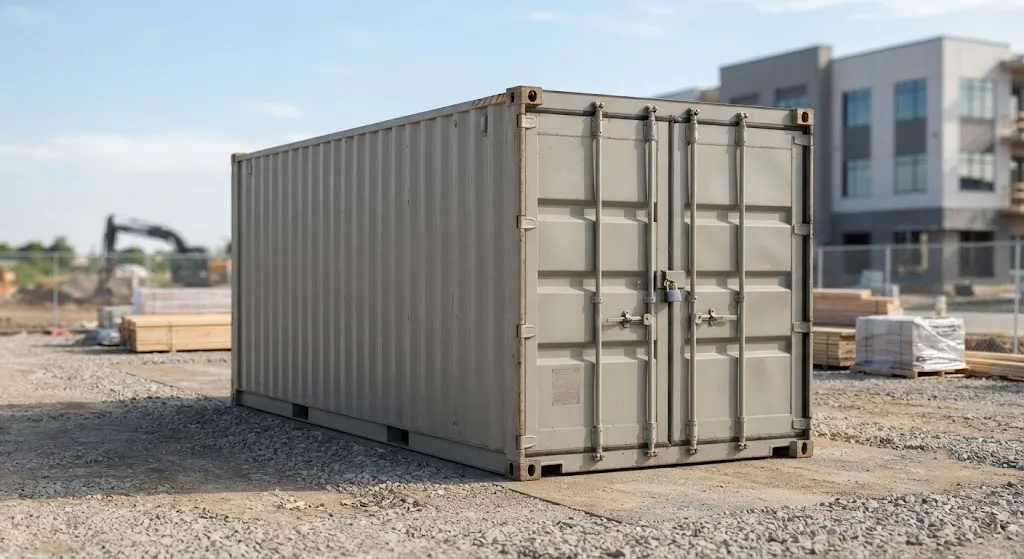
Placement drives everything else. Ground has to be level and stable, since ADA Standards 302.1 calls for firm, slip-resistant footing, and that spec is a fair baseline for any unit even where an accessible one is not required. Keep units off the irrigation line and clear of spray zones, and if your crew handles herbicides or insecticides, OSHA 1926.51(f)(1) requires washing facilities for that specific exposure, so a hand station belongs right next to the mixing area, not just at the restroom. Farms with year-round labor, not just seasonal picking, sometimes need an accessible unit for an employee or visitor with a mobility limitation. ADA Standards 213.2 says at least 5 percent of clustered units, and never fewer than one, must be accessible, and our ADA accessible porta potty meets the 36 inch route and 60 inch turning circle specs under ADA 403.5.1 and 304.3.1. Winter operations in New Bedford bring their own placement issues; see porta potty in winter for what changes when the ground freezes. For farms near Acushnet Center, 3.3 miles northeast, or Fairhaven, 4.9 miles southeast, delivery is a short run, which keeps the delivery fee toward the lower end of the band. Larger farm operations running mobile offices or equipment storage alongside the restroom setup often add a storage container rental or mobile office trailer rental to the same site visit.
Frequently asked questions
How often do farm units get serviced during harvest?
Weekly is the ANSI/PSAI Z4.3 baseline for up to 10 users on a 40-hour week, but harvest crews working longer days or larger headcounts need more frequent pumps. We schedule around your picking calendar, not a fixed weekly slot, so tanks do not run over mid-week.
Do farm restrooms need potable water on site?
Yes. OSHA 1926.51(a)(1) requires an adequate supply of potable water wherever people work, and 1928.110 extends that specifically to hand-labor agricultural sites. We pair each restroom cluster with a handwashing station so both requirements are covered in one delivery.
Can I get a single unit delivered to a small family farm?
Yes. A single standard porta potty rental works fine for a small crew under the 20-person ratio in OSHA 1928.110. Delivery fees run 100 to 500 dollars depending on distance from New Bedford, so a nearby farm pays less than one out past Wareham.
What happens if my crew moves fields mid-season?
We relocate the unit. The quarter-mile walk requirement in OSHA 1928.110 resets whenever your crew shifts to a new block, so keeping the restroom within reach sometimes means moving it more than once a season. Call ahead so we can route it into the schedule.
Is a hand sanitizer station enough instead of a sink?
No. 29 CFR 1910.141(d)2 requires soap and towels or a hand drying device; sanitizer alone does not satisfy it. Pair a hand sanitizer station rental with an actual portable sink rental for full compliance on a working farm.
Next step
Get a delivery date
Tell us the address, the dates and the headcount. We size the order and confirm the route.